
Wet basement problems rarely start with an inch of standing water. They start quietly, with a musty smell, a chalky stain on the wall, or a corner of the carpet that never quite dries. By the time water is pooling on the floor, the problem has usually been building for a while. Knowing the early warning signs lets Wichita homeowners catch a wet basement before it turns into mold, ruined storage, and damage to the foundation itself. Here is what to watch for and what those signs mean.
What Counts as a Wet Basement?
A wet basement is not only one that floods. Any basement with persistent moisture qualifies, and that includes high humidity, condensation, and damp walls just as much as visible water. Many Wichita basements are wet for years without ever flooding, slowly damaging stored belongings, framing, and air quality while the homeowner assumes a damp, musty basement is just normal. It is not. A healthy basement should be dry, and the signs below are how it tells you it is not.
The Warning Signs of a Wet Basement
Some of these are obvious, and some are easy to miss until you know to look for them. The more of them you notice together, the more certain it is that water is getting in.
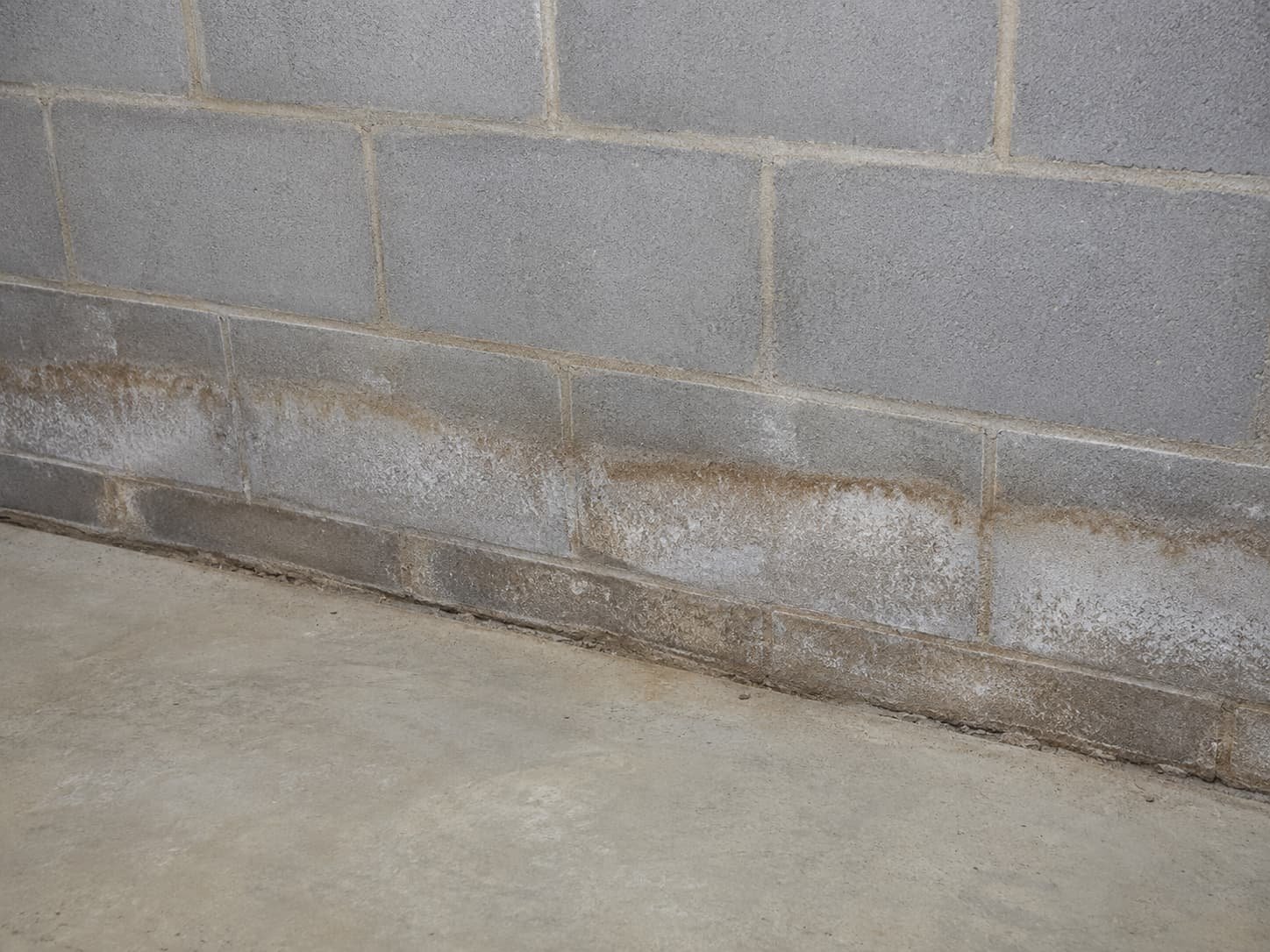
Water stains and tide marks are among the clearest signs. A horizontal brown or yellow line along the lower part of a wall shows how high water has risen, and dark patches mark where moisture has soaked through. Efflorescence is another telltale sign: a white, chalky, crystalline residue on concrete or block walls, left behind as water moves through the masonry and evaporates. If you can scrape off a white powder, water has been there.
A musty or earthy smell is often the first thing people notice, and it points to dampness and possibly mold even when nothing looks obviously wet. Visible mold or mildew, whether on walls, stored boxes, or the underside of finished surfaces, confirms there is enough moisture to support growth. Condensation and high humidity, with sweating walls, foggy windows, or a clammy feel, mean the air itself is holding more water than it should.
Other signs show up in the materials around the basement. Peeling paint and bubbling wall coatings, rust on appliance legs and metal fixtures, damp or buckling flooring, and warped wood trim all point to ongoing moisture. A sump pump that runs constantly, or one that cannot keep up during storms, is a clear signal of how much water the basement is fighting. And of course actual seepage, water trickling in along the floor-wall joint or through a crack after heavy rain, removes any doubt.
Why Wichita Basements Get Wet
The root cause in the Wichita area is almost always the same: expansive clay soil that holds water against the foundation. When spring storms and snowmelt saturate the ground, the clay traps that water rather than letting it drain, and the trapped water builds hydrostatic pressure that forces moisture through cracks, joints, and the pores of concrete and block. The harder it rains, the harder the water pushes.
Location intensifies the problem for some homes. Properties near the Arkansas River, the Little Arkansas, and Cowskin Creek sit over a higher water table, so the ground stays wet longer. Older homes with block walls and original drainage were rarely built to handle today’s storms, and almost everywhere, grading that slopes toward the house and downspouts that empty next to the foundation deliver even more water exactly where it does the most harm.
Why a Wet Basement Is Worth Fixing
A wet basement is more than an inconvenience. The most immediate concern is mold, which needs only moisture to grow and can affect indoor air quality throughout the home, since air moves upward from the basement into the living space. The U.S. Environmental Protection Agency is clear that the key to controlling mold is controlling moisture, which is exactly what fixing a wet basement accomplishes. You can read its guidance at the EPA.
There is a structural cost too. The same saturated soil and water pressure that wet a basement also push on foundation walls, and over time that can lead to bowing and cracking. The Foundation Performance Association ties good drainage directly to long-term foundation stability. On top of that, a chronically wet basement lowers a home’s value and is a recurring red flag in inspections when it comes time to sell.
What to Do About a Wet Basement
The fix depends on how water is getting in, but it almost always centers on managing water rather than just drying what you can see. Interior drainage with a sump system captures water at the footing and pumps it away from the house. Crack injection seals leaking points in poured walls. A vapor barrier and dehumidification control the damp air that drives the musty smell and mold. In some cases exterior waterproofing is needed to stop water before it reaches the wall.
Most of these solutions fall under basement waterproofing, which is the service built specifically to keep a basement dry. If the moisture has also begun to push walls inward, bowing wall repair addresses the structural side, and homes with a crawl space rather than a basement are handled by crawl space repair. The right combination depends on the diagnosis.
What Not to Do
Running a dehumidifier alone, repainting over stains, or simply mopping up after each storm treats the symptoms while the water keeps coming. These steps can make a basement feel better temporarily, but they do nothing about the pressure and drainage driving the moisture in, so the problem returns with the next wet season. The lasting fix addresses where the water is coming from, not just the water you can see today.
Finished Basements Hide the Problem
A finished basement can mask a wet basement for years. Drywall, paneling, carpet, and insulation cover the foundation walls and floor, so the stains, efflorescence, and seepage that would be obvious on bare concrete happen out of sight. The first hint is often a musty smell, a warm-weather increase in humidity, or mold appearing along the base of a wall, by which point moisture may have been building behind the finishes for a long time.
If you have a finished basement and notice any musty odor, buckling baseboards, discolored drywall near the floor, or carpet that feels damp, it is worth investigating rather than assuming a finished space is automatically a dry one. Catching hidden moisture early can save the cost of tearing out and replacing finishes that mold has ruined.
When to Call a Professional
If you are seeing several of the signs above, water is actively entering after storms, or you have noticed mold or a persistent musty smell, it is worth a professional inspection. A specialist can trace where the water is getting in and recommend the right combination of drainage and sealing, rather than guessing. As part of a full assessment, our foundation repair team also checks whether the moisture has begun to affect the structure.
Wichita Foundation Pros offers free, no-pressure inspections with a clear written diagnosis, so you know exactly why your basement is wet and what it will take to keep it dry. If your basement is showing any of these signs, request a free estimate or call us before the next storm makes it worse.